
O atuador Scotch Yoke está em conformidade com a norma de montagem ISO 5211?
2026-06-23 Blog
The Scotch Yoke actuator is a critical component in various industrial applications, ensuring precise and reliable motion control. A common question that arises is whether this actuator conforms to the ISO 5211 mounting standard.
This article explores the compatibility, benefits, and considerations related to the Scotch Yoke actuator and ISO 5211. Understanding these aspects is essential for procurement managers, equipment specialists, and supply chain leaders in industries such as oil and gas, petrochemicals, and manufacturing.
The ISO 5211 standard provides a universal mounting interface, enhancing interchangeability and efficiency. Below, we delve into the specifics of this compatibility and its implications for industrial applications. The Scotch Yoke actuator is designed to convert rotational motion into linear motion, making it ideal for automation tasks.
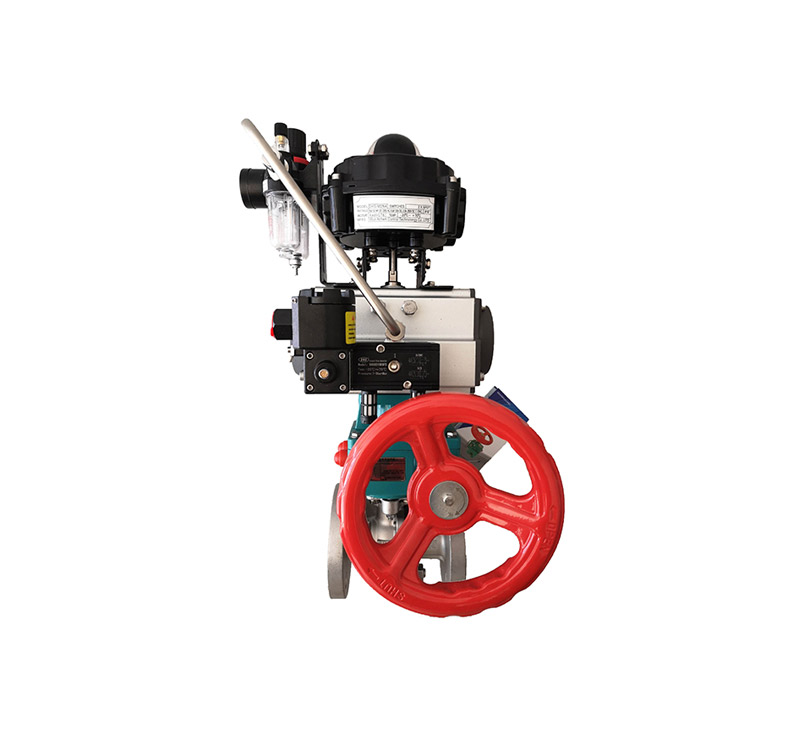
Its mounting compatibility with ISO 5211 is a key factor for many industries, ensuring seamless integration with existing systems. This standardization reduces installation time and costs, improving overall operational efficiency. Compatibility with ISO 5211 also means easier maintenance and replacement, which are critical for long-term reliability. For procurement professionals, this compatibility simplifies the selection process, as they can rely on a proven standard. The benefits of using an ISO 5211-compliant Scotch Yoke actuator are multifaceted.
First, it ensures uniformity across different manufacturers, reducing the risk of mismatches. Second, it allows for quick replacements, minimizing downtime in critical applications. Third, it aligns with industry best practices, enhancing safety and performance.
These advantages make it a preferred choice for industrial automation. However, there are considerations to keep in mind. The Scotch Yoke actuator must be properly aligned with the ISO 5211 mounting interface to ensure optimal performance. Misalignment can lead to reduced efficiency and increased wear and tear. Therefore, thorough inspection and calibration are necessary during installation.
Additionally, environmental factors such as temperature and vibration must be accounted for, as they can affect the actuator’s performance. For EPC companies and system integrators, understanding these considerations is vital. They must ensure that the actuator and mounting system are compatible with the overall design. This includes verifying the actuator’s specifications and the mounting interface’s dimensions.
By doing so, they can deliver robust and reliable solutions to their clients. In conclusion, the Scotch Yoke actuator’s conformity to the ISO 5211 mounting standard offers significant advantages for industrial applications. Its compatibility enhances efficiency, reduces costs, and simplifies maintenance.
For procurement managers and industry professionals, choosing an ISO 5211-compliant actuator is a prudent decision. It ensures seamless integration, long-term reliability, and alignment with industry standards. By prioritizing this compatibility, industries can achieve optimal performance and operational excellence.
This article serves as a guide for making informed decisions regarding Scotch Yoke actuators and their mounting standards.
Produtos em destaque
Contacte-nos
Endereço: Sala 203-1, 2.º andar, Bloco A, n.º 9, Rua Xinqin, Distrito de Xinwu, Cidade de Wuxi, Província de Jiangsu, República Popular da China
Telemóvel: 0086-188-5271-7918
Email:william@wxaccton.com
Site: www.actuator-china.com